
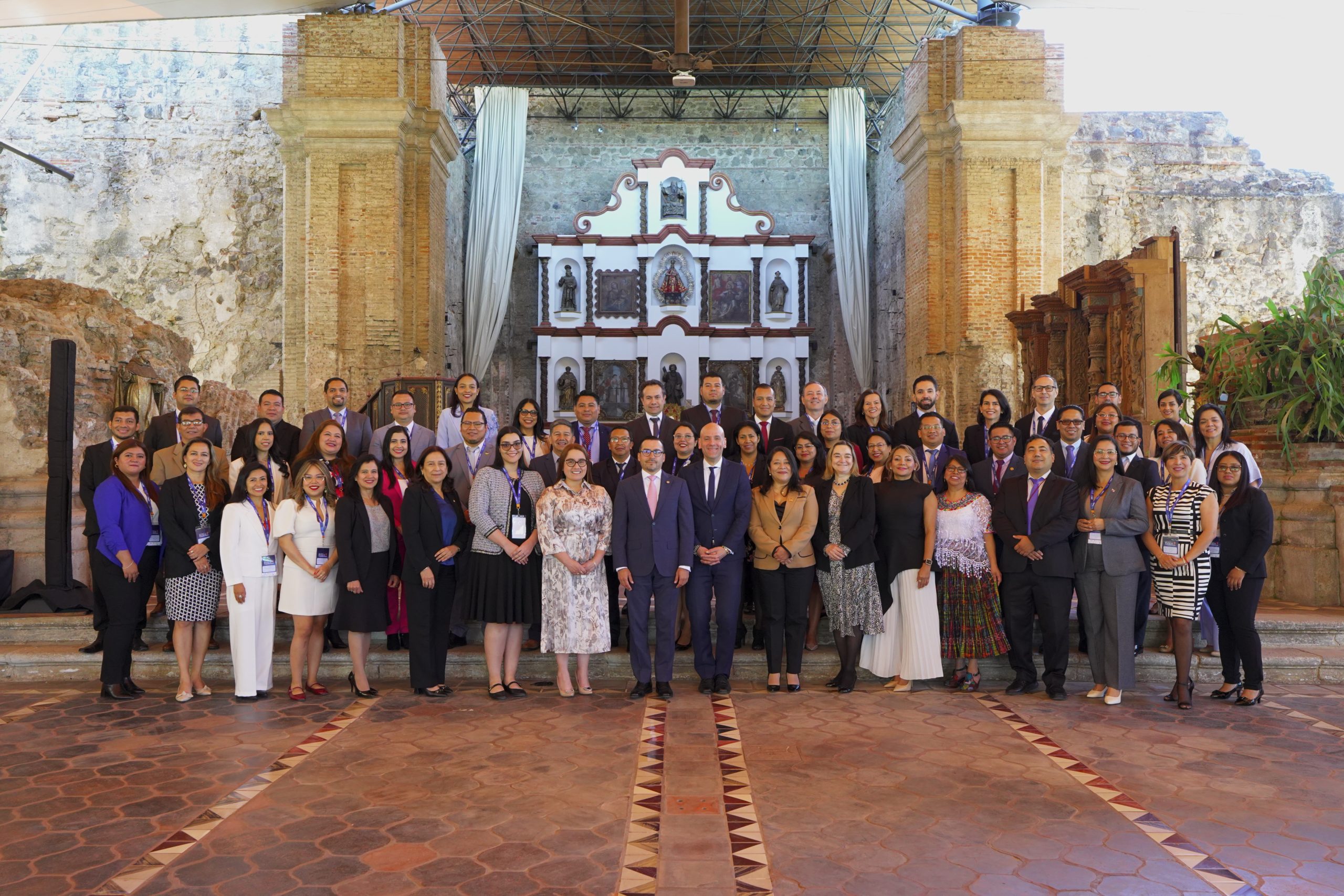
In Antigua Guatemala, from April 13 to 16, 2026, the Regional Workshop on Transfer Pricing – Advanced Level was held, a high-level technical space aimed at strengthening specialized capacities in tax audit practices. The event was jointly organized by the Superintendencia de Administración Tributaria de Guatemala (SAT), la Organización para la Cooperación y el Desarrollo Económicos (OCDE) y la Secretaría Ejecutiva del Consejo de Ministros de Hacienda o Finanzas de Centroamérica, Panamá y República Dominicana (SECOSEFIN) through the Programa Buena Gobernanza Financiera de la Cooperación Alemana para el Desarrollo,GIZ, and had the support ofAgencia Estatal de Administración Tributaria de España (AEAT), el Centro Interamericano de Administraciones Tributarias (CIAT) & Grupo del Banco Mundial (BM).
This exchange brought together more than fifty participants from various countries, establishing itself as a strategic platform for sharing knowledge, experiences, and best practices among tax administrations and ministries of finance in the region, as well as regional and international organizations. The broad participation reflected the commitment of countries in the region to strengthen their tax systems, making them more equitable, efficient, and aligned with international standards, in a context of increasing complexity of cross-border operations.
The workshop included the participation of officials from the tax administrations of Costa Rica, El Salvador, Guatemala, Honduras, Nicaragua, Panama, and the Dominican Republic—COSEFIN member countries—as well as invited administrations from South America, including Brazil, Colombia, Ecuador, and Paraguay. Their participation represents a significant milestone in regional coordination and cooperation in international taxation, fostering dialogue among countries with varying levels of experience in transfer pricing audits, and generating a positive impact on both technical and procedural learning beyond the COSEFIN region.
In Antigua Guatemala, from April 13 to 16, 2026, the Regional Workshop on Transfer Pricing – Advanced Level was held, a high-level technical space aimed at strengthening specialized capacities in tax audit practices. The event was jointly organized by the Superintendence of Tax Administration of Guatemala (SAT), the Organisation for Economic Co-operation and Development (OECD), and the Executive Secretariat of the Council of Ministers of Finance of Central America, Panama, and the Dominican Republic (SECOSEFIN), through the Good Financial Governance Program of the German Development Cooperation (GIZ). It was supported by the Spanish State Tax Administration Agency (AEAT), the Inter-American Center of Tax Administrations (CIAT), and the World Bank Group (WBG).
This exchange brought together more than fifty participants from various countries, establishing itself as a strategic platform for sharing knowledge, experiences, and best practices among tax administrations and ministries of finance in the region, as well as regional and international organizations. The broad participation reflected the commitment of countries in the region to strengthen their tax systems, making them more equitable, efficient, and aligned with international standards, in a context of increasing complexity of cross-border operations.
The workshop included the participation of officials from the tax administrations of Costa Rica, El Salvador, Guatemala, Honduras, Nicaragua, Panama, and the Dominican Republic—COSEFIN member countries—as well as invited administrations from South America, including Brazil, Colombia, Ecuador, and Paraguay. Their participation represents a significant milestone in regional coordination and cooperation in international taxation, fostering dialogue among countries with varying levels of experience in transfer pricing audits, and generating a positive impact on both technical and procedural learning beyond the COSEFIN region.
Participants reaffirmed the benefits of applying the OECD Transfer Pricing Guidelines and discussed challenges and success stories in their audit work, as well as key considerations in cases brought before courts. These discussions enabled the identification of patterns, strategies, and recommendations to be considered by different tax administrations in their future audit activities.
Participants also highlighted the contribution of Chile’s Internal Revenue Service (SII), whose virtual presentation comprehensively addressed risk analysis as a central pillar of transfer pricing audits. The SII presentation included practical examples and concrete results demonstrating how risk-based management enhances the efficiency and effectiveness of specialized audits.
Within the framework of the workshop, the Basic Manual for Transfer Pricing Auditors was officially presented, representing a strategic milestone in strengthening institutional capacities in the region. This instrument is the result of a collaborative process among officials and specialists from the tax administrations of COSEFIN member countries, with the support of the OECD and the backing of the German Development Cooperation (GIZ).
The Manual is designed to strengthen the technical capacities of tax administration officials in the highly specialized area of transfer pricing, providing practical guidelines, standardized criteria, and operational tools aligned with international best practices. It also aims to contribute to the sustainability of technical knowledge by facilitating continuous training processes, reducing gaps among administrations, and supporting the development of more effective and consistent audits across the region.
Finally, participants emphasized the high strategic value of this type of regional workshop, underscoring that in the field of transfer pricing audits, the systematic exchange of experiences, approaches, and lessons learned is both essential and strategic for strengthening institutional capacities. In a context of increasing complexity in cross-border operations, these regional spaces directly contribute to promoting more effective, coordinated responses aligned with international standards, reaffirming the region’s commitment to a more fair, transparent, and sustainable international taxation framework.
Looking ahead, participants highlighted the need to establish regional mechanisms for the use of international instruments that facilitate information exchange, joint risk and data analysis, joint audits across jurisdictions, and the consideration of transfer pricing jurisprudence in the region.